
Playa del Carmen Sargassum 2026: Where the Season Stands
Playa del Carmen Has Cleared 33,500 Tons of Sargassum This Season, And The Federal Response Just Got Bigger
on August 21, 2026
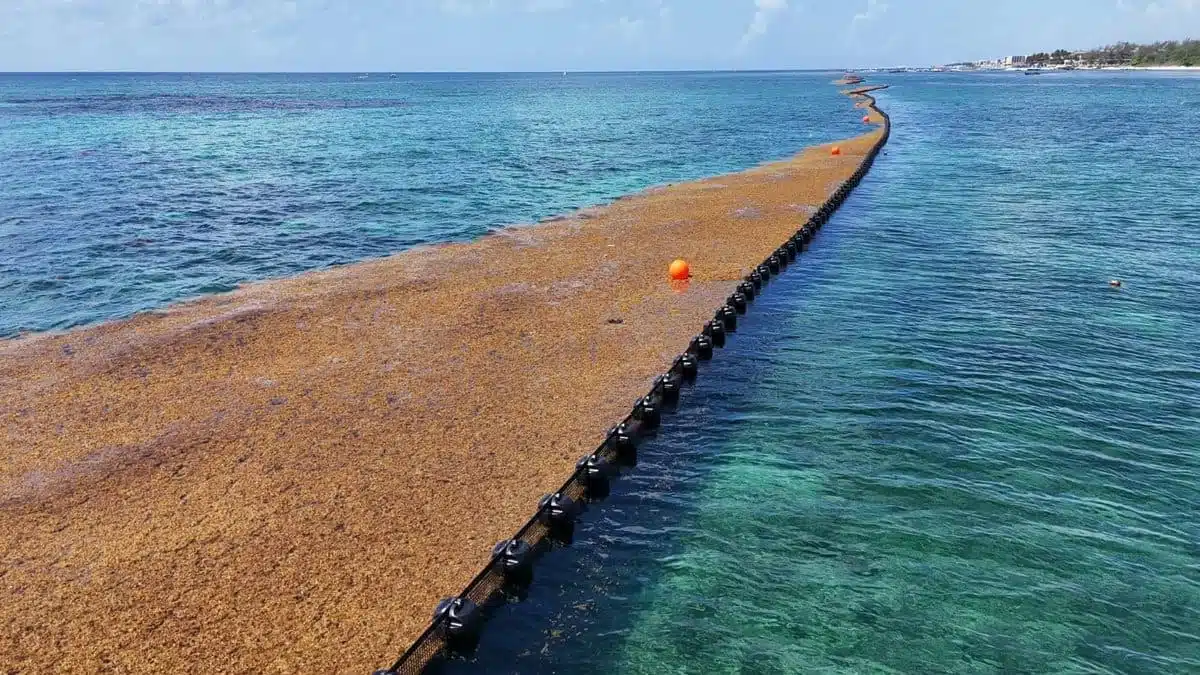
Credit: La Jornada
Back in March, we reported that Playa del Carmen was bracing for one of the heaviest sargassum seasons on record and preparing accordingly. Five months later, here’s an honest accounting: that forecast was right, and 2026 is on track to be the heaviest season Quintana Roo has ever recorded.
But the second half of that sentence matters just as much. The peak window is closing, the federal government has committed its largest response yet, and the beaches were never covered every day or everywhere to begin with.
Here’s where things actually stand.
The Numbers, Straight
Quintana Roo’s Secretariat of Ecology and Environment (SEMA) reported 112,668 tons of sargassum collected across the state’s eight coastal municipalities as of the most recent count. That figure already surpasses the roughly 96,000 tons collected in all of 2025, and the season isn’t over — SEMA projects closing the year near 130,000 tons, about 30% above last year.
Playa del Carmen accounts for the largest share of any municipality: 33,511 tons, or roughly 36% of the state total. That is not because Playa gets the worst of it in some cosmic sense. Our beaches face east onto the open Caribbean with no island or reef barrier offshore to break up incoming rafts, and the city runs one of the most aggressive collection operations on the coast. A big number here reflects both the arrival and the response.
The federal picture is blunt. Mexico’s Environment Secretary described the situation as extremely serious, with an estimated 90,000 tons floating offshore and roughly 9,000 tons arriving daily at the height of the influx.
What’s Actually Being Done
This is where 2026 differs from previous seasons. The strategy is shifting from cleaning beaches after the fact to intercepting the algae at sea.
An additional 2 billion pesos (around 117 million dollars), managed through the Navy, is going toward offshore collection capacity, including a second vessel brought over from the Pacific. The Navy has already removed more than 16,000 tons directly at sea this season. Onshore, Quintana Roo has just under 12,000 meters of containment barriers installed, with SEMA pushing to reach 40 kilometers of coastal coverage with federal support. In Playa del Carmen specifically, the barrier system has been extended from 2.5 to five kilometers.
There’s also a longer-term move worth noting: sargassum has been reclassified under Mexico’s national fisheries framework as a resource rather than waste, which opens the door to processing it commercially. A circular-economy park is planned for Puerto Morelos, where companies are already turning the algae into biofertilizer for export.
The Part Most Reports Leave Out
Sargassum does not arrive every day, and it does not arrive at every beach.
State monitoring tracks around 140 beaches individually, and conditions swing week to week depending on wind direction — northerly and easterly winds push the rafts away, westerlies bring them in. A stretch of northern winds earlier this month produced a genuine lull along the coast. On any given day some beaches are heavily affected while others nearby are clear.
Before you write off a beach day, check a live sargassum map. The Sargassum Monitoring Network tracks individual beaches along the coast, 13 of them in Playa del Carmen, drawing on community reports and official sources — some entries refresh within the hour. It’s the same thing locals check before deciding where to go. Just treat it as a snapshot rather than a forecast: conditions can turn between the morning and the afternoon.
When The Season Ends
Quintana Roo’s Sargassum Monitoring Center projects that arrivals will decline gradually through August and September, and largely taper off by October.
That timing lines up with what we see year after year from managing properties here: the heavy window runs roughly May through August, and from November through April the beaches are consistently clear. If you’re planning a trip for high season, sargassum is not the thing to worry about. If you’re coming in the next few weeks, plan with flexibility — the cenotes, Cozumel’s west coast, and the inland ruins are entirely unaffected, and a rental with a pool changes the math on a heavy beach day.
What This Means For Your Trip
- Peak influx: August through early October, tapering after
- Clear months: November through April
- Playa del Carmen so far this season: 33,511 tons collected
- Daily conditions: vary by beach — check a live sargassum map
- Unaffected alternatives: cenotes, Cozumel’s west side, eco-park coves, archaeological sites
Sargassum is a real feature of Caribbean summers now, and pretending otherwise doesn’t help anyone plan a trip. What we can tell you is that the city treats it as an operational problem rather than an embarrassment, the response this year is the most serious we’ve seen, and the calendar is about to work in your favor.


